Welcome to Our Company -

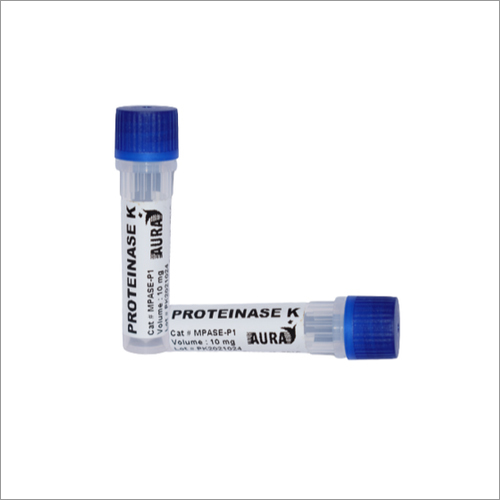
Molecular Biology Proteinase K
Product Details:
- Chemical Name Proteinase K
- Other Names Endopeptidase K, Protease K
- CAS No 39450-01-6
- Type Serine Protease (Molecular Biology Grade)
- Application Digestion of proteins, Removal of nucleases in DNA/RNA preparations, Molecular biology protocols
- Application Method Add directly to reaction mixtures for protein digestion; incubate at recommended temperature and concentration
- Feature High purity, Active over a broad pH range (pH 7.512), Stable and efficient in the presence of denaturants (SDS, urea)
- Click to View more
X
Molecular Biology Proteinase K Product Specifications
- Proteinase K
- White to off-white lyophilized powder or crystalline powder
- High purity, Active over a broad pH range (pH 7.512), Stable and efficient in the presence of denaturants (SDS, urea)
- 2 years (when stored dry at 20C)
- Endopeptidase K, Protease K
- Solid
- For protein digestion in molecular biology research, DNA/RNA extraction, sample preparation
- Produced from Tritirachium album (fungal source)
- Serine Protease (Molecular Biology Grade)
- 39450-01-6
- 99%
- Soluble in water and buffer solutions
- Add directly to reaction mixtures for protein digestion; incubate at recommended temperature and concentration
- Proteinase K enzyme (30 U/mg dry weight), free of RNase & DNase contamination
- Digestion of proteins, Removal of nucleases in DNA/RNA preparations, Molecular biology protocols
- 8.0
- 3756C (Active up to 65C)
- Heat inactivation at 95C for 10 minutes
- Certified free of DNase and RNase
- Avoid inhalation and skin contact, use gloves and mask
- Store at 20C (long-term dry), or 4C (short-term for solutions)
- Available in 1 g, 5 g, 10 g quantities
- Lyophilized powder, can be reconstituted in water or buffer
- 30 Units/mg (digests casein as substrate)
Molecular Biology Proteinase K Trade Information
- Cash in Advance (CID), Cheque, Cash Advance (CA)
- 2-7 Days
- All India
Product Description
Capitalizing on the capability of talented workforce, we are supplying a huge array of Molecular Biology Proteinase K. It is used in molecular biology to remove contamination from preparations of nucleic acid. This solution helps to protect the nucleic acids from nuclease attack. Molecular Biology Proteinase K is efficient to clean up enzymatic reactions. It is also effective to inactivating the nucleases that could degrade DNA. It is highly characterizing for consistent performance and optimal activity.
Versatile Application in Molecular Biology
Proteinase K is invaluable in molecular biology research, including DNA and RNA extraction, sample preparation, and general protein digestion. Its high efficiency and purity help maintain sample integrity by removing unwanted proteins and nucleases, facilitating reliable results in protocols such as PCR and sequencing.
Exceptional Stability and Activity
This enzyme maintains high activity (30 U/mg) under a wide pH spectrum (7.5-12) and temperature range (37-56C, up to 65C), making it suitable for diverse laboratory environments. The stability in the presence of denaturants like SDS or urea enhances its digestion capability, even with challenging samples.
Simple Storage and Handling
Proteinase K is supplied as a lyophilized powder, ensuring long-term shelf life (2 years at 20C dry) and easy reconstitution in water or buffer. For solution storage, short-term refrigeration at 4C is recommended. Safety precautions include avoiding inhalation and skin contact; gloves and masks should always be worn during handling.
FAQ's of Molecular Biology Proteinase K:
Q: How is Proteinase K used in molecular biology protocols?
A: Proteinase K is commonly added directly to reaction mixtures for protein digestion during DNA or RNA extraction. Incubate the enzyme at the recommended temperature and concentration, typically between 37C and 56C, for optimal results.Q: What are the storage requirements for Proteinase K?
A: To preserve enzyme activity, store Proteinase K as a dry powder at 20C for long-term use. Reconstituted solutions can be kept at 4C for short periods to ensure stability.Q: When should heat inactivation be performed for Proteinase K?
A: Heat inactivation is needed when you want to stop the proteolytic activity. This can be accomplished by heating your reaction mixture at 95C for 10 minutes after completion of protein digestion.Q: Where is this Proteinase K manufactured and distributed?
A: Proteinase K is produced by manufacturers, suppliers, exporters, and distributors in India, ensuring access to high-quality molecular biology grade enzyme for research institutions and laboratories.Q: What are the benefits of using Proteinase K certified free of DNase and RNase?
A: Being certified free of DNase and RNase contamination guarantees the integrity of extracted DNA and RNA, preventing degradation and enabling precise downstream analysis in molecular biology applications.Q: What safety precautions should I follow when handling Proteinase K?
A: When handling Proteinase K, use gloves and a mask to avoid inhalation or skin contact. Follow standard laboratory practices and consult the material safety data sheet for further instructions.Q: How can Proteinase K be reconstituted for use?
A: The lyophilized powder can be reconstituted in sterile water or appropriate buffer solutions to prepare enzyme stocks for experimental use. Ensure complete dissolution before adding to samples for effective protein digestion.Tell us about your requirement

Price:
Quantity
Select Unit
- 50
- 100
- 200
- 250
- 500
- 1000+
Additional detail
Mobile number
Email


AURA BIOTECHNOLOGIES PRIVATE LIMITED
GST : 33AAMCA8110A1ZA
GST : 33AAMCA8110A1ZA
Contact Details

- Survey No. 270, Plot No. 1 and 2, Galaxy Road, Ayanambakkam, Chennai - 600095, Tamil Nadu, India
- Phone : 08045800169

- Mr PAZHANIMUTHU ANNAMALAI (Manager)
- Mobile : 08045800169
- Send Inquiry
 Send Inquiry
 Send Inquiry
 Send SMS
AURA BIOTECHNOLOGIES PRIVATE LIMITED
All Rights Reserved.(Terms of Use)
Developed and Managed by Infocom Network Private Limited.
Developed and Managed by Infocom Network Private Limited.


